
Tearing Off Your Old Roof Could Be a Rip-Off
How Northwest Indiana Property Owners Get Talked Into Demolition They Don't Need, And What the Smarter Ones Do Instead. The most expensive decision you'll make this year might be the one someone else already made for you.

🔲 Indiana code allows two sealed membranes. Most buildings only have one. That means an overlay is legal, warranted, and significantly cheaper than a tear-off.
🔲 The chemistry of your existing membrane matters. Wrong patch product = the repair was never a repair.
🔲 FLEXION vinyl drops rooftop temps from 170°F to around 80°F. Your NIPSCO bill notices.
🔲 Delay doesn't pause the clock. Every freeze-thaw cycle is making the decision for you.
Kenny Almost Watched His Boss Write a $340,000 Check He Didn't Owe

Kenny's building owner got a number. $340,000. Full tear-off on a strip center in Griffith.
The roofer walked the roof for twenty minutes, came back with a clipboard, and called it done. Nobody asked questions. Most don't.
Here's what didn't make the clipboard: Indiana building code allows a maximum of two sealed roof membranes on a commercial structure. That building had one. Which means a brand-new system, upgraded insulation, modern chemistry, factory warranty, could go directly on top of the existing membrane without removing a single square foot.
No dumpsters. No exposed deck. No $340,000.
The overlay option would have come in significantly less. Same protection. Same warranty. Fraction of the disruption. The first roofer didn't bring it up. Tear-offs pay better.
Why Tear-Offs Are the Default And Why That Should Bother You
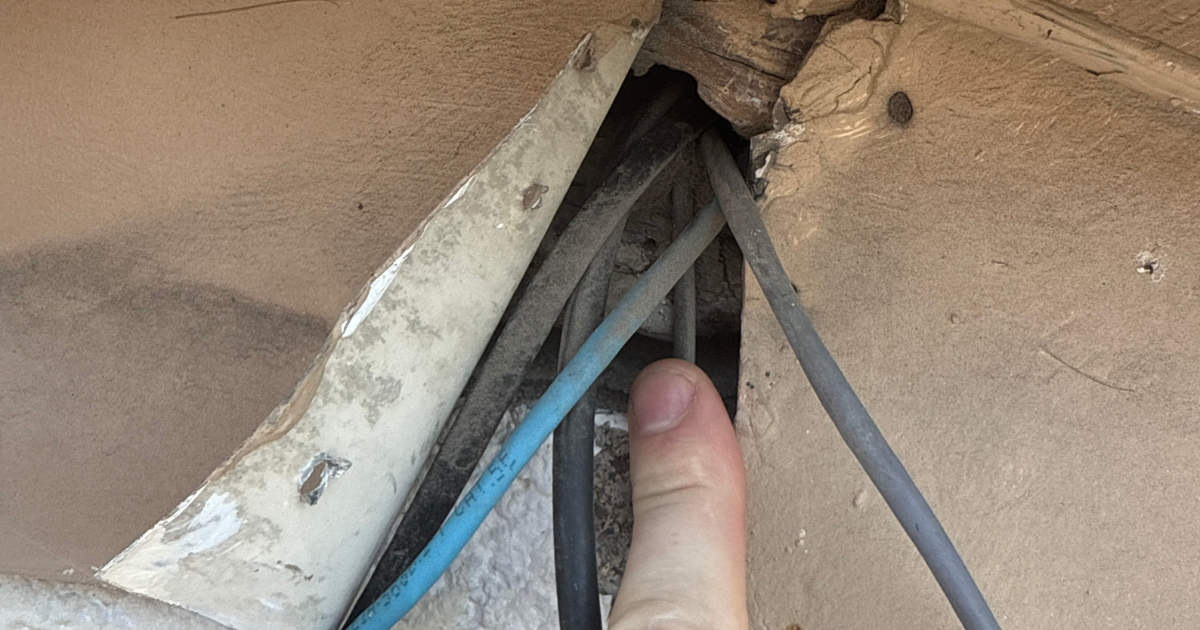
Most contractors are set up for one thing. Removal and replacement is what they know, what their crews train for, and what their equipment is built to do.
So when they walk your roof, they see a tear-off. Not because it's the only option. Because it's their option.
Here's what a tear-off actually involves: mobilizing a full demolition crew, renting dumpsters, ripping off the existing membrane, hauling away tons of material, and exposing the deck to whatever Lake County decides to deliver that week. Every day the building sits open is a day the interior is at risk. Inventory. Equipment. Ceiling systems. Electrical. All of it.
An overlay skips every one of those steps.
Rigid insulation boards go directly over the existing membrane. Then FLEXION vinyl unrolls in 100-foot sections, heat-welded seams, molecular bond, no glue, no adhesive, no expiration date on the connection. Your building stays sealed the entire time. Your tenants stay open. Your risk stays at zero.
The Chemistry Problem
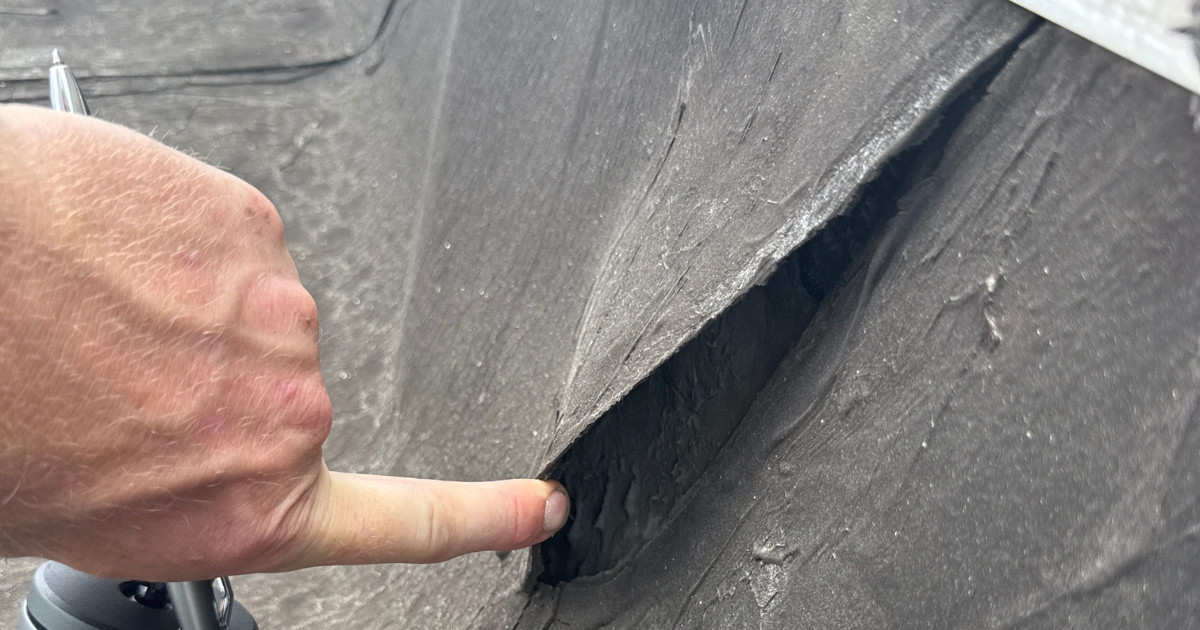
This is the part that explains every repair that didn't hold.
Commercial roofing membranes are built on specific chemical platforms. TPO is a polyolefin. PVC is a vinyl. EPDM is a synthetic rubber. Modified bitumen is asphalt-based. Different molecular structure. They don't play nice together.
When a maintenance crew patches a PVC roof with a product built for rubber, the patch doesn't bond. It sits on the surface. Looks fine for a few weeks. Then it lifts, moisture gets underneath, and the cycle starts over.
This is not rare. This is the most common problem on commercial roofs in Northwest Indiana. Somebody grabbed what was at the supply house, applied it, and called it done. The chemistry was wrong. The repair was never a repair. It was a delay with a receipt.
When we evaluate a roof, the first check is what's already been applied and whether it's chemically compatible with the existing membrane. Incompatible materials always fail at the bond line. Always. We know where to look because we know what we're looking for.
Overlay vs. Tear-Off, True Cost Comparison

The first bid never shows the full number. It should.
A tear-off includes demolition labor, disposal fees, dumpster rental, weather risk days, potential interior damage, extended project timelines, and tenant disruption, all before a single square foot of new membrane goes down.
An overlay eliminates demolition, disposal, dumpsters, and weather exposure entirely. The insulation upgrade delivers immediate utility savings. The reflective FLEXION vinyl surface drops roof temperature from roughly 170°F to around 80°F. Your HVAC system stops fighting a 100-degree war every Summer afternoon.
That's not a one-time savings. That's a monthly line item reduction on your NIPSCO bill for the life of the roof.
NIPSCO maintains active rebate programs for insulation and reflectivity upgrades on commercial buildings in their service area. So the system that protects the building also reduces operating costs and qualifies for utility incentives at the same time.
The 300-month factory warranty on FLEXION vinyl covers 25 years. Annualize that cost. Compare it to a tear-off that gives you the same warranty period but costs significantly more upfront and delivers zero energy improvement during the process.
That's the math the other roofer hopes you never run.
✉️ You already know which property we're talking about.
Subject Property Address: ___________________________
Drop the address and we'll tell you exactly what it qualifies for, overlay, insulation depth, NIPSCO rebate eligibility.
No sales call. No pressure. Just the real picture on that one building.
[ Email address ] → [ Send Me the Real Stuff ]
Stop Doing Nothing

Delay is the number one cause of decay. Full stop.
For every $1 of roof maintenance deferred, property owners in Northwest Indiana typically spend $4 to $8 correcting the downstream damage. A $4,200 repair ignored for 18 months can quietly become a $68,000 replacement.
The freeze-thaw cycle doesn't negotiate. Lake-effect moisture arrives between September and March with mechanical consistency. Every cycle that water expands and contracts inside a compromised seam compresses your decision window.
By the time it shows up on a ceiling tile, it's not a roofing conversation anymore. It's a structural conversation with an insurance adjuster and possibly a lawyer.
The building owners in Hammond and Portage who move early always look like geniuses in hindsight. They're not. They just ran the numbers before the ceiling tile did it for them.

Northwest Indiana Commercial Flat Roof Overlay FAQs
Is a commercial roof tear-off always necessary? No. Indiana building code permits up to two sealed membranes on a commercial structure. If your building has one existing membrane, an overlay with upgraded insulation and a new FLEXION vinyl system is a code-compliant, warranty-backed alternative that eliminates demolition costs, weather exposure, and tenant disruption.
Why do most roofers recommend a tear-off instead of an overlay? Most commercial roofing contractors are equipped and trained for removal-and-replacement projects. An overlay requires different materials, different installation methods, and different expertise. Contractors recommend what they know — and tear-offs are what most of them know.
How do I know if my roof qualifies for an overlay? If your building currently has one sealed membrane and the existing deck is structurally sound, you likely qualify. We evaluate the existing membrane chemistry, insulation depth, and overall deck condition before making a recommendation. Some roofs genuinely need a tear-off. Most don't.
What is FLEXION vinyl and how is it different from other roofing membranes? FLEXION is a PVC vinyl membrane system installed in 100-foot sections with heat-welded seams. The seams bond at the molecular level, no glue, no adhesive, no expiration date. It carries a 300-month (25-year) factory warranty and reflects solar energy, reducing rooftop temperatures from roughly 170°F to around 80°F.
Can I get NIPSCO rebates for upgrading my commercial roof insulation? Yes. NIPSCO maintains active rebate programs tied to insulation and reflectivity improvements on commercial buildings in their service area. Eligibility depends on your building's current insulation depth and type. A property-specific evaluation identifies what you qualify for.
How much can a roof overlay save on utility costs? Upgrading from two inches of insulation to five inches (R-32) with a reflective FLEXION membrane creates a measurable, recurring reduction in HVAC load. For a 20,000-square-foot building in Northwest Indiana, that's not rounding error, it's a capital planning decision. The specific number depends on your building's square footage, current insulation, and HVAC configuration.
✉️ Let’s look at that ONE property.
You know the one.
Subject Property Address: ___________________________
Drop the address below and we'll send you a FREE, NO obligation evaluation specific to that building, specific to what it's costing you right now.
[ Email address ] → [ Send Me the Real Stuff ]
Pristine Industrial Roofing — Serving commercial and industrial property owners across Lake County and Porter County. Liquid-applied Conklin coating systems. FLEXION vinyl membranes. Proactive maintenance programs. Cedar Lake | Lowell | Crown Point | Hammond | Whiting