
Will Insurance Cover My Commercial Roof? The Hard Truth
Your Insurance Company Is Not Your Roof’s Retirement Plan. Wind, hail, or fire? Maybe. Twenty years of neglect and ponding water? That bill has your name on it. Most claims die long before the adjuster leaves the parking lot.

- Insurance Covers Events, Not Old Roofs. Commercial property insurance pays for sudden damage from covered perils like wind, hail, or fire. It does not cover aging, deterioration, ponding water, or deferred maintenance.
- Documentation Is the Difference Between Approval and Denial. Maintenance records, inspection reports, repair invoices, and photos can determine whether a claim moves forward or gets rejected for “lack of maintenance.”
- Most Claims Fail Before They Even Start. Roofs with visible deterioration, standing water, biological buildup, or no maintenance history give adjusters an easy path to denial.
- The Reporting Window Is Closing Faster Than You Think. Most commercial policies require claims to be reported within 12 to 24 months of the storm event. If you can’t tie damage to a specific documented date of loss, the claim likely won’t proceed.
If you're asking this question, you're already ahead of most building owners. The ones who don't ask are the ones who find out the hard way.
You own a commercial building. The roof is aging. Maybe it's been leaking in the same corner since Fall. Maybe a hailstorm came through Hammond six months ago and your maintenance guy mentioned some dings on the metal flashing. Maybe you just opened the insurance renewal and the premium jumped $18,000 and now you're wondering whether it's finally time to make a move.
So you're here. Good.
The question is simple, will insurance cover my commercial roof replacement? The answer is more complicated than anyone in this industry wants to admit, and the gap between what building owners expect and what carriers actually approve has never been wider. This article is going to close that gap. No cheerleading. No false hope. Just what you need to know before you pick up the phone.
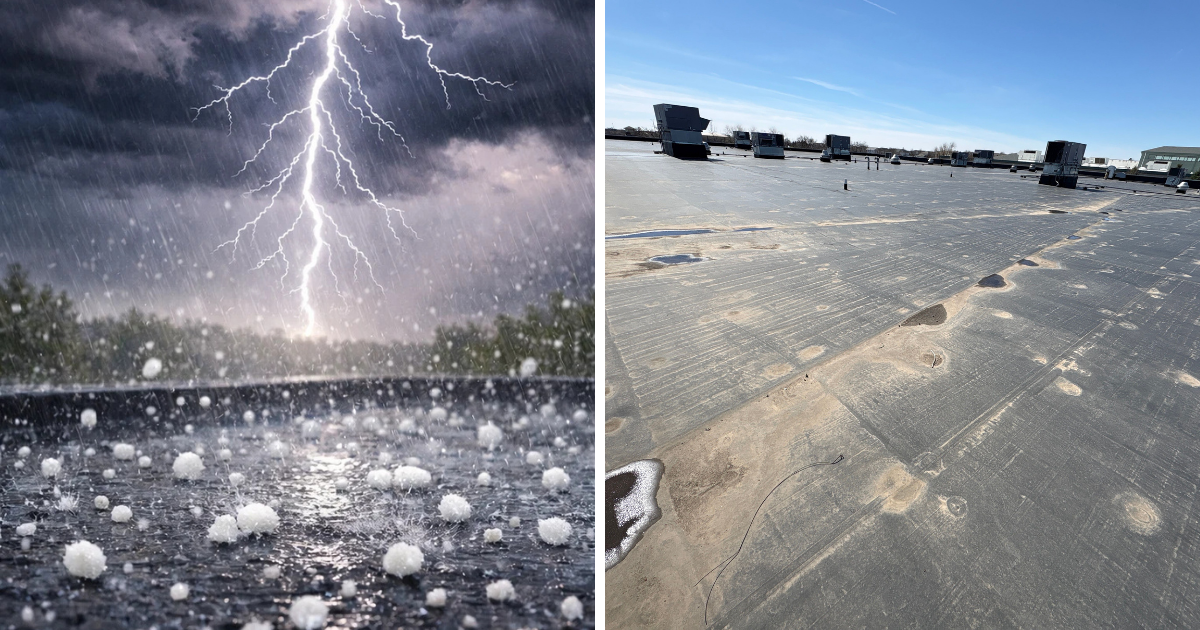
What Insurance Is Actually Designed to Cover
Let's start at the beginning, because most of the confusion lives here.
Commercial property insurance is not a maintenance plan. It is not a warranty. It is not a fund you've been paying into that you can cash out when the roof gets old. Insurance is designed to cover one specific type of event: sudden, accidental damage caused by a covered peril. The industry shorthand for this is an "act of God." Wind. Hail. Fire. A tree through the membrane. Lightning. These are the qualifying events. That's the list.
What insurance does not cover, and will never cover, regardless of how long you've been a customer or how many years you've paid without filing, is age, deterioration, deferred maintenance, or gradual water intrusion that has been working its way through the insulation for three years. Those are ownership costs. Those belong to you.
Understanding that distinction before you file is not pessimism. It is the difference between a productive claim process and a denial letter that could also trigger a coverage review on your entire building.
The Three Covered Events That Actually Move Claims Forward
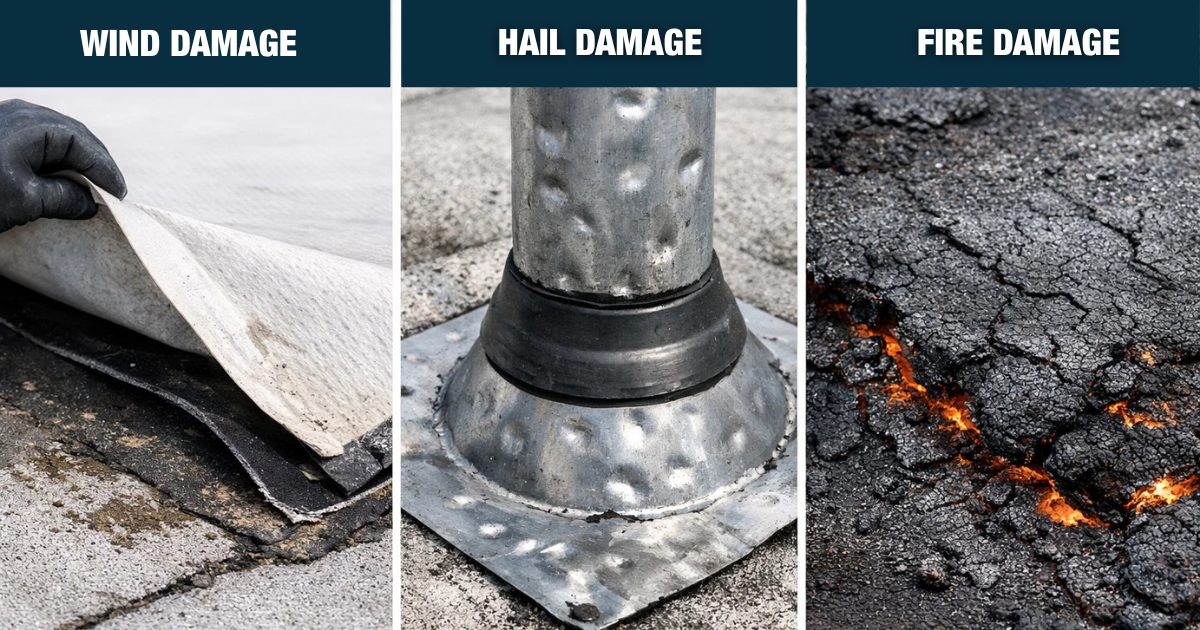
Wind damage. Wind is the most common qualifying event for commercial flat roofs in Northwest Indiana, and for good reason. The Great Lakes corridor, Hammond, Portage, Hobart, Merrillville, gets sustained wind loads that commercial markets in other regions never see. The weakest points of any flat roof are the corners and edges, where wind curls over the parapet wall and begins peeling membrane away from the substrate. This is called wind rip lift, and when it's documented correctly, with photos showing displaced material, lifted seams, and separation at the edge detail, it is a legitimate, covered event that survives adjuster scrutiny.
Hail damage. Hail is the other big one, particularly in Spring and early Fall when convective storm activity picks up across the region. Here's what adjusters are actually looking for, impact marks on soft metals. The vent hoods. The pipe boots. The flashing at penetrations. Those dimpled, dented surfaces are what confirm that hail was present and that it struck with enough force to constitute damage.
On membrane surfaces, hail creates punctures, bruising, and granule displacement. On tPo, the thin, seam-happy plastic that was oversold to a generation of building owners who deserved better, hail damage can be severe and sometimes impossible to detect without an infrared scan. Superior menu options exist.
Fire damage. Straightforward. If there's fire, there's coverage. Less common on flat commercial roofs, but worth naming.
These three events are the foundation. If your damage connects to one of them with documentation and a date, you have the beginning of a viable claim. If it doesn't, you don't, and no amount of persuasion changes the actuarial math.
What Kills a Claim Before It Starts
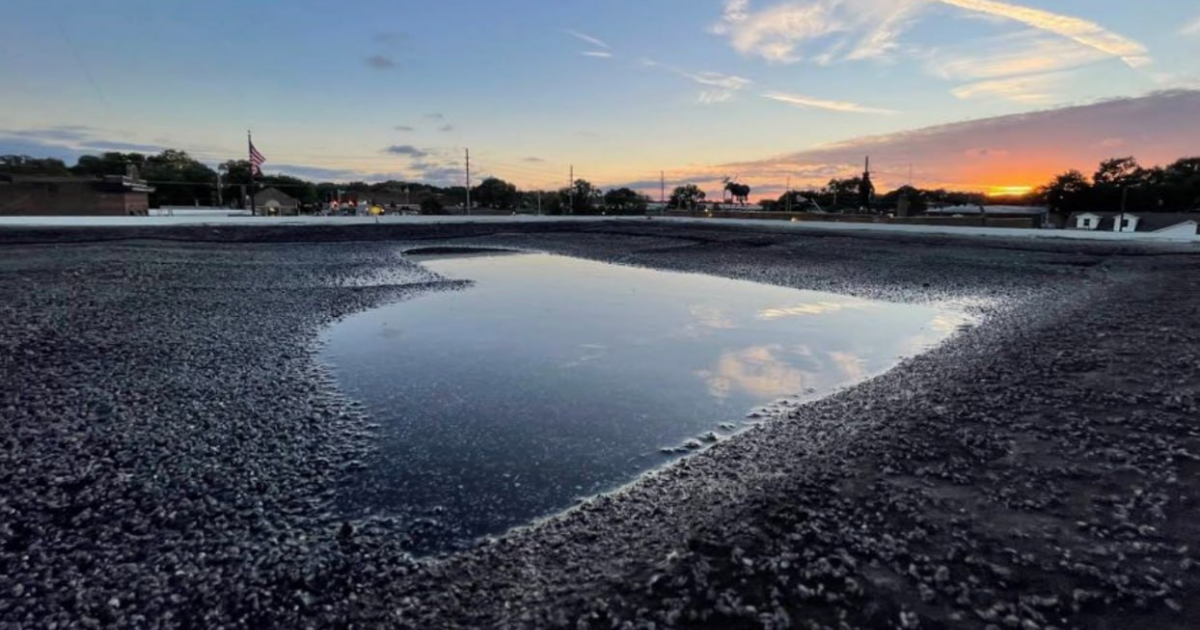
This is where the real education lives. Insurance adjusters are trained investigators. Their job, not because they're villains, but because it's literally the function they serve, is to find the accurate cause of loss. When that cause is age or neglect rather than a covered event, they will find it. Here is what they look for.
Age and visible deterioration. A roof membrane that has been cooking under UV exposure for 25 years without recoating, repair, or documentation is going to be classified as aged out. The adjuster does not need to argue with you. The condition of the surface tells the whole story.
No maintenance records. This is the one that catches the most building owners off guard. If there is no paper trail, no inspection reports, no repair invoices, no signed service agreements, the adjuster will cite neglect. The absence of records is its own kind of evidence. It tells the story of a roof that nobody was paying attention to.
Ponding water. Standing water on a flat roof is a drainage failure. Drainage failure is a maintenance issue. Maintenance issues are not covered events. If your roof has visible ponding, even in photographs taken after a storm, the adjuster will use it.
Biological contamination. Bird droppings. Leaf accumulation in low spots. Algae. Moss. These are not just cosmetic problems. They are evidence of neglect that a carrier can point to in justifying a partial denial or a reduced payout.
Structural compromise. Sagging membrane. Deflected decking. Visible depressions in the roof plane. These signal long-term load and moisture issues that predate any storm event. An adjuster who sees structural compromise is going to ask how long it's been there, and the answer is almost always "longer than the storm."
No permit history. In most municipalities across Lake and Porter County, roofing work requires a permit. If the last roofing permit on file for your building is from 2003, the adjuster takes note. It signals that no professional work has been performed, and that tends to support a neglect narrative.
This is not an exhaustive list. It's the common thread. Every item on it is preventable with a basic maintenance program and a few hundred dollars in documentation. That is the painful part. Most of these claim killers are cheap to avoid and expensive to explain after the fact.
The Reporting Window Is Not Flexible
Even a legitimate storm claim can die on procedural grounds. Every commercial property policy contains a reporting requirement, a window after the date of loss within which you must notify your carrier. That window is getting shorter as insurers tighten policy language. Twelve months is common. Some carriers have moved to 18. A few still allow 24.
If a hailstorm moved through Portage in the Spring of last year and you're reading this in Fall, you may already be outside your window. The first question any claims department will ask is, "What was the date of loss?" If you cannot tie your damage to a specific, documented weather event within the reporting period, the claim does not proceed. It's not a negotiation. It's a contract condition.
The practical lesson is simple. When a significant weather event happens, when NIPSCO reports widespread outages, when your neighbors are calling roofers, when the news runs storm-track coverage for the Calumet region, that is the moment to get a professional set of eyes on your roof. Not next Fall. Not when the lease rolls over.
The AI Problem

Here is something that was not true ten years ago and is very true now, your insurance carrier may already know more about your roof than you do.
Major carriers are deploying satellite imagery and AI analysis tools to proactively audit their commercial portfolio. They are using high-resolution aerial photography to flag roofs that appear aged, ponded, or deteriorating, before a claim is ever filed. If your roof looks neglected from space, you may receive a 60-day non-renewal notice. Not a cancellation. A non-renewal. A letter that says, politely, that your coverage will not be continuing.
That letter matters beyond the inconvenience of finding a new carrier. When your roof isn't covered, your building effectively isn't covered. Roof-related damage accounts for more than 60 percent of all commercial building insurance claims. Lose the roof rider and you've opened a gap in your coverage that no umbrella policy quietly fills in.
The time to address your roof's condition is before that letter arrives. Not after.
What a Legitimate Claim Actually Looks Like
For a commercial roof claim to move through the process and reach approval, a few things generally need to be true. First, there is a documented weather event with a specific date of loss. Second, the damage pattern on the roof is consistent with that event, not with five years of deferred maintenance that happened to get worse after the rain. Third, there is some record that the roof was being maintained prior to the event. And fourth, the claim is filed within the policy's reporting window.
That's it. That's the checklist. It's not complicated, but it requires preparation, most of which happens long before a storm rolls in.
This is also where having the right people in your corner matters. Max4Claims works exclusively on the commercial claims and supplement side of this equation. Their team spent years sitting on the other side of the desk, as senior file examiners and desk adjusters working directly for carriers. They know exactly how a claim is evaluated, because they evaluated thousands of them. An approval rate of 75 percent on supplements is not an accident. It's what happens when the people writing your claim already know where the traps are.
✉️ Is your roof claim-ready, or are you hoping for the best?
Before a storm changes the conversation, get an honest look at where you stand.
Subject Property Address: ___________________________
We'll tell you what we see. No pitch. No sale. No pressure.
[ Email address ] → [ Send Me the Real Stuff ]
What Comes Next
Understanding whether a claim is viable is the first step. The second, and this is where most building owners lose ground, is understanding how the Conklin system changes the math on what happens after the claim settles, or doesn't. Whether insurance pays out 100 cents on the dollar, 60 cents, or nothing at all, there is a path forward that does not involve tPo and a five-year prayer. That's the next article in this series.
Commercial Roof Insurance Claims

Q: Does commercial property insurance cover roof replacement?
A: Only if the damage is caused by a covered peril, typically wind, hail, or fire, and the damage is documented, reported within the policy window, and not attributable to age or neglect. Insurance does not cover deterioration, deferred maintenance, or ponding water.
Q: What is the most common reason a commercial roof claim gets denied?
A: Lack of maintenance records and evidence of pre-existing deterioration. Adjusters are trained to distinguish storm damage from age-related failure. A roof with no maintenance history and visible wear gives them an easy path to denial.
Q: How long do I have to file a commercial roof claim after a storm?
A: Most policies require reporting within 12 to 24 months of the date of loss, and that window is tightening. Some carriers require notification within 12 months. If you cannot identify a specific date of loss tied to a documented weather event, the claim is unlikely to proceed.
Q: Can an insurance company cancel my coverage because of my roof's condition?
A: They can choose not to renew coverage. Carriers now use satellite imagery and AI analysis to identify commercial roofs that appear aged or neglected. A 60-day non-renewal notice tied to roof condition is increasingly common in this market.
Q: What types of roof damage does insurance actually cover on a commercial building?
A: Wind rip lift, hail impact damage to membrane and soft metals, and fire damage are the primary covered categories. Structural failure, biological contamination, ponding water, and UV deterioration are not covered events.
Q: What is a supplement in a commercial roofing insurance claim?
A: A supplement is a charge added to an existing claim for items that were omitted, underpaid, or discovered after the initial estimate was written. Working with a specialist like Max4Claims, whose team averaged an additional 11 percent gross income for roofing clients through supplement approvals, can recover significant money that an initial adjuster estimate leaves on the table.
Q: Should I work with a claims specialist before filing a commercial roof claim?
A: If your claim is significant, yes. Former insurance adjusters who now work on the contractor's side, like the team at Max4Claims, know exactly how carriers evaluate damage, what documentation survives scrutiny, and where initial estimates habitually undervalue the scope. Their 75 percent supplement approval rate reflects that insider knowledge in practice.
The Paper Trail That Saves a Claim
Most building owners find out the hard way that the roof was never the problem. The problem was the absence of any record that anyone ever cared about it.
Adjusters are not just inspecting the membrane. They are building a narrative. A roof with documented inspections, dated repair invoices, and a visible service history tells one story. A roof with nothing on file, no permits pulled, no contractor visits logged, no maintenance agreement in place, tells another. That second story ends in a denial letter more often than not, regardless of what the storm damage looks like.
The good news is that the documentation bar is not as high as most people assume. You do not need a binder full of monthly reports. You need a traceable record that shows professional attention was paid at reasonable intervals. Two or three dated inspection reports over a five-year span. A repair invoice from when the flashing was sealed three years ago. A signed service agreement with a contractor who can confirm the roof's condition prior to the loss event. That is the file. That is what shifts the narrative from neglect to maintenance.
The time to build that file is not after the storm. It is before anyone is asking for it.
What Waiting Actually Costs
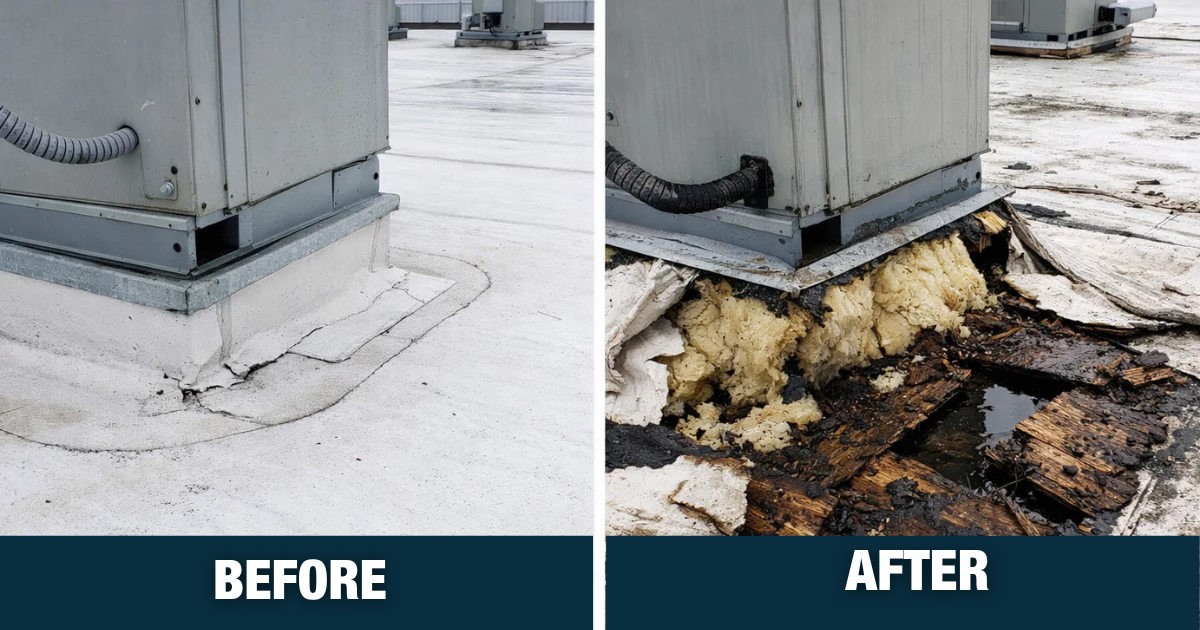
There is a version of this conversation that building owners have with themselves every year. The roof needs attention. The budget is tight. There is no active leak, just some ponding in the low spot near the HVAC curb, and the membrane looks a little tired in the corners. It can wait until Spring.
It cannot wait until Spring. Or rather, it can, but the math gets uglier every season it does.
For every dollar of commercial roof maintenance deferred, the downstream correction typically costs four to eight dollars. A $4,200 repair left unaddressed for eighteen months becomes a $68,000 replacement. And that calculation does not include the interior damage to insulation, decking, and ceiling assemblies that develops quietly while the water finds its path. It does not include the business interruption when a tenant space becomes unusable. It does not include the claims complication when the adjuster pulls back the membrane and finds saturated insulation that has been wet for two winters.
The deferred maintenance cycle is the most expensive thing a building owner can do to a flat roof. It is also the most common. The carriers know this. The adjusters are trained to find the evidence of it. And the building owner who has been putting it off for three years is the one who ends up absorbing the full cost, because insurance was never designed to cover the consequences of a decision that was made on a spreadsheet.
✉️ You've read the hard truth. Now get the honest assessment.
Subject Property Address: ___________________________
We'll tell you where you stand before your window closes. No pitch. No sale. No pressure.
[ Email address ] → [ Send Me the Real Stuff ]
Pristine Industrial Roofing — Serving commercial and industrial property owners across Lake County and Porter County.
Liquid-applied Conklin coating systems. FLEXION vinyl membranes. Proactive maintenance programs.
Valparaiso | Hammond | Portage | Merrillville | Hobart | Gary
This is Article 1 of a series on commercial roof insurance. Next: How to Build a Winning Commercial Roof Claim
Read other blog:

We Love Conversations
 SoHelpful@PristineIndustrialRoofing.com