
The Four Party Warranty Responsibility Matrix | Who Actually Pays When Your Roof Fails?
Insurance vs. Owner vs. Installer vs. Manufacturer. Understanding the blame game, escape clauses, and why documentation is your only defense.

🔲 Four parties determine who pays for roof failures, your property insurance (covers acts of God), you as building owner (responsible for maintenance), the installer (liable for workmanship), and the manufacturer (responsible for material defects). When a leak happens, they all point fingers at each other.
🔲 Insurance companies spend steak dinners in Indianapolis writing legislation that adds 12+ exclusion paragraphs. Their goal is profit protection, not claim payment. They'll blame God, blame the installer, blame anyone except themselves.
🔲 Building owner responsibilities include documented maintenance, cleaning drains twice yearly, preventing "biological contamination" (bird droppings, leaves, acid rain), and managing third party contractors like HVAC techs who puncture roofs and void warranties.
🔲 Decay is from delay. Neglect is the #1 killer of commercial roofs. If you haven't cleaned your roof in 3 to 5 years, you're aging it too fast, just because it's out of sight doesn't mean it's not decaying.
The Phone Call Nobody Wants
Your facility manager calls you Monday morning. "We've got water coming through the ceiling in the warehouse. Ruined about $15,000 in inventory. The roof is leaking."
Your first thought, "We have a warranty. The roofer will fix it."
Your second thought, "We have property insurance. They'll cover the damaged inventory."
Here's what actually happens next, four different parties start pointing fingers at each other, and you're stuck in the middle watching the blame game while water keeps dripping on your merchandise.
Welcome to the Four Party Warranty Responsibility Matrix. This is where commercial building owners learn expensive lessons about who's actually responsible for what.
The Four Parties (And What They're Actually Responsible For)
When your roof fails, there are four entities that might be liable. Understanding who covers what is the difference between getting your building fixed and getting stuck with the entire bill.
Party #1: Your Property Insurance Company
What they cover,
❄️ Hail damage
💨 Wind damage (if properly documented)
🔥 Fire damage
🏚️ Structural failures from sudden events
💥 Collision damage (vehicle hits building, tree falls on roof)
🌪️ Acts of God (tornadoes, hurricanes, natural disasters)
What they DON'T cover,
😅 Acts of Todd (we’ll meet him later)
⏳ Gradual deterioration from age
🛠️ Workmanship defects
🧱 Material failures under warranty
🧹 Maintenance neglect
😬 Anything that could be blamed on someone else
Here's the reality about insurance companies that nobody talks about openly,
They spend steak dinners down in Indianapolis writing legislation that adds 12 more exclusion paragraphs.
That's not cynicism. That's how insurance policy works. A steak dinner buys fancy paperwork that protects insurance companies' profit margins. Lobby the legislature. The little guys get hurt because how are you going to enforce payment? There's this presumption of benevolence, that insurance companies want to help you.
They don't. Their whole business model is collecting premiums and avoiding payouts. They'll blame the installer. They'll blame the manufacturer. They'll blame God. They'll blame anyone except themselves.

Insurance covers what warranty doesn't. But only if you can prove it falls into their narrow definition of coverage.
Party #2: You, The Building Owner
What you're responsible for,
📝 Documented maintenance (cleaning, conditioning, inspection)
🚿 Keeping drains clear of debris
🐦 Preventing 'biological contamination' (bird droppings, leaves, dirt)
👷 Managing third-party contractors (HVAC, hood cleaners, etc.)
⏰ Timely notification of defects (remember that 30-day clause?)
🚫 Preventing unauthorized repairs
🔒 Not allowing roof access without contractor approval
Here's where building owners get nailed repeatedly: they think maintenance is optional.
It's not.
Warranty documents contain trap doors disguised as maintenance requirements. Let's expose a few.
Trap Door #1: "Biological Contamination"
This phrase appears in nearly every commercial roofing warranty. It sounds technical and vague. That's intentional.
"Biological contamination" means,
💩 Bird droppings. Dribbles.
🍂 Leaves and twigs
🪨 Dirt … dirty dirt
⚠️ Acid rain (extremely common in Northwest Indiana)
⬇️ Anything at all that lands on your roof and isn't removed
Northwest Indiana is the second or third highest volume oil refinery region in America. BP Whiting, petroleum refineries, Valero, they're all up in the harbor. Plus the steel industry is still very real. US is still producing steel, surprisingly.
These industrial contaminants land in the water cycle. They fall as rain. They settle on your roof. Acid rain isn't a hypothetical concern here, it's a measured reality.
And let's not forget, we're right next to Chicago. East Chicago Fireworks land on roofs. That's risky. You don't want a business life of risk, you want a fire rated roof, not something old and rubber based that's full of grease and easy to ignite.
If you haven't cleaned your roof in 3 to 5 years, you've voided your warranty through "biological contamination" even if you didn't know that clause existed.

Trap Door #2: Third Party Contractor Damage
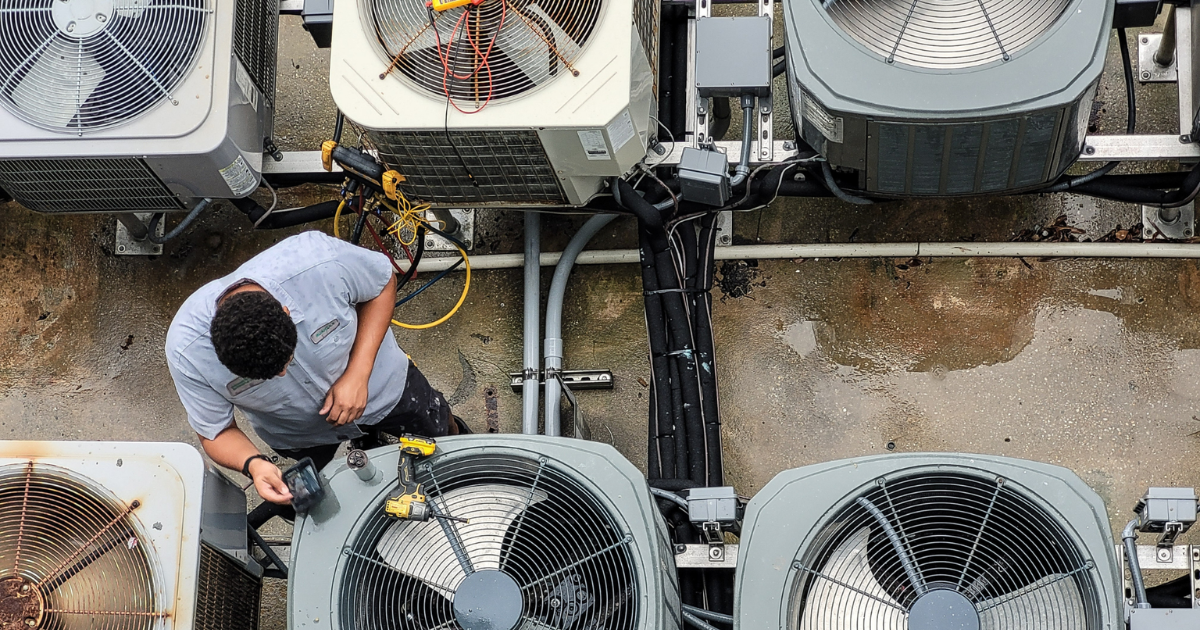
HVAC technicians get up on your roof to service equipment. They puncture the membrane. They drop screws. They leave drills and tools. They're notorious for causing careless leaks. We love those guys … Becuase they basically provide our children with groceries from their clumsiness.
Hood cleaners for restaurants spray everywhere, creating big messes. They loosen seals. They step on gas pipes. They bend things that shouldn't be bent. They break PVC drainage pipes.
Who's responsible when the roof leaks three months after the HVAC guy was up there? According to your roofing warranty, YOU are. You allowed unauthorized access. Have technicians sign a waiver. Will provide the document. Yes literally.
The solution? Make HVAC contractors and hood cleaners sign waivers stating they're responsible for any roof damage discovered within 90 days of their work. Document every third party roof access. Take photos before and after.
Trap Door #3: The "Lack of Reading" Problem
Most warranty failures are simply a lack of reading. People don't care, so they don't stare. They won't read. They don't have a highlighter. They're not going to push back. They just cave in.
We're so used to signing 27-page fine-print documents without reading even one paragraph. And contractors count on that. They count on you not knowing about the "biological contamination" clause. They count on you not understanding "adequate maintenance."
The great news? We have AI now.
You can tell AI to skim the document. Take a picture of your warranty like we did with that Five Star contract in Article #1. Ask, "Tell me three or four potential problems in this warranty that I could address."
There's no more excuse for laziness. We have tools to overcome laziness. You owe it to yourself to know who built the language and who they're defending.
It's typically a high powered lawyer defending the factory that wrote the warranty. The local installer just copies and pastes whatever he's given. And he's only going to show up for 12 to 24 months on the local labor warranty anyway. Then he's out. Then it's between you, the building owner, and the factory.
The factory has money. They're lawyered up. They have 12 structured escape clauses at minimum.
It's like that trap door where the magician pretends to fall through the floor. That's what you'll feel like. Whatever you were trusting, you just lost all your support, because of two sentences you skimmed over instead of asking, "What does this mean and how can this reduce my risk?"
Larger companies have risk management departments. Congratulations!
You are the risk manager.
Use your phone. Screenshot the warranty. Use Claude or ChatGPT. Figure out the risk. Identify the trap doors.
Party #3: The Installer or Contractor
What they're responsible for,
🛠️ Workmanship defects (improper seam welding, fastening errors)
⚙️ Installation errors (wrong materials, incorrect techniques)
📐 Detail work failures (corners, pipes, flashing, parapet)
👷 Crew related mistakes during installation
What they're NOT responsible for,
🏭 Material defects from the manufacturer
💥 Substrate failures hidden under the new roof
🌪️ Acts of God (wind, hail, tornado damage)
🚫 Lack of building owner maintenance
👷 Third party contractor damage after installation
Standard contractor workmanship warranties run 2 years. Premium installers might extend to 5 years on major projects. After that? You're on your own unless you have nationwide labor coverage.
But here's the installer's favorite escape clause, "It wasn't my fault, it was an Act of God."
The Grey Area: Was It an Act of God or Act of Todd?
Let's talk about wind damage. Specifically, what happens when high winds lift a seam on a poorly installed TPO roof.
Is that "wind damage" covered by insurance? Or is that "installation defect" covered by contractor warranty?
The answer depends on who's investigating.
Wind creates what we call "wind rip lift." It's the same aerodynamic force that elevates a Boeing 747 into the air. Wind curls over the top of your building and catches in the corners, ripping the membrane up.
This turns into what we call a wind sail. It keeps pulling and ripping because installers typically don't glue or screw sufficiently in the corners.

The installers cut corners in the corners.
Think about that phrase. They literally cut corners in the corners, the exact place where wind rip lift is strongest.
So who pays when the corner rips up during a 45 mph windstorm?
Insurance says, "That's an installation defect, not wind damage. We don't cover poor workmanship. Talk to Todd."
Installer says, "That's wind damage, an Act of God. My warranty excludes weather events."
Manufacturer says, "The material didn't fail. The installation did. Not my problem."
You, the building owner, say, "Somebody needs to fix my roof and I'm getting three different excuses."
Maybe it wasn't an Act of God. Maybe it was an Act of Todd, the installer who rushed through the corner fastening because it was Friday afternoon and he wanted to get home.
But good luck proving that in the finger pointing game.
Party #4: The Material Manufacturer
What they're responsible for:
🧱 Material defects (membrane splits, coating failures)
🏭 Manufacturing errors (contaminated batches, incorrect formulation)
🏠 Product performance failures when properly installed and maintained
What they're NOT responsible for:
👷 Improper installation by contractor
🧹 Lack of building owner maintenance
🌪️ Acts of God
💧 Ponding water (compressing cheap insulation inside)
🐦 Biological contamination
🚫 Unauthorized repairs or modifications
Manufacturer warranties are riddled with escape clauses. We can look at publicly available warranty documents from Carlisle, Johns Manville, and other major manufacturers, they all contain multiple trap doors that shift liability away from the factory.
The pattern is consistent, create enough exclusions that material failures can almost always be blamed on installation defects, maintenance neglect, or Acts of God.
And remember, most manufacturer warranties are pro rated. That 20-year coverage loses value every year. By year 10, it's worth maybe 30% of original coverage.
Tired of The Blame Game?
We expose warranty escape clauses, trap doors, and four-party finger-pointing before you sign anything. If you're super awesome and value protection over promises, subscribe for warranty intelligence updates. If you prefer expensive surprises, maybe just keep scrolling.
So Who Actually Pays? The Real World Answer
Here's the pattern that plays out thousands of times across America every year.
1. Roof leaks. Building owner calls installer.
2. Installer inspects and blames either the manufacturer (material defect) or the building owner (lack of maintenance).
3. Building owner contacts manufacturer. Manufacturer sends inspector who blames either the installer (improper installation) or the building owner (maintenance neglect).
4. Building owner contacts property insurance. Insurance adjuster photographs damage and determines it's "gradual deterioration" not covered by policy.
5. Building owner gets stuck with the entire repair bill while everyone else walks away clean.
Sound familiar?
This is why documentation matters. This is why preventative maintenance isn't optional. This is why reading warranty documents with a highlighter and a lawyer or at least AI assistance, is essential.
The Only Strategy That Works: Prevention + Documentation
Decay is from delay.
Neglect is the number one killer of commercial roofs. Not wind. Not hail. Not material defects. Neglect.
If you haven't cleaned your roof in 3 to 5 years, what's wrong with you? You clean the parking lot. You clean your car. You clean the windows. You clean the bathrooms.
Just because the roof is out of sight doesn't mean it doesn't need cleaning.
It's a very expensive membrane. It just needs cleaned and conditioned to remove garbage, acid, and standing water. If nobody's looking at it, I guarantee it's aging too fast.
Age measures the decay of material.
Just because you're not looking at it doesn't mean it's not decaying. Everything falls apart gradually. Yes, it might take five years or ten years, but if you're not looking, decay is still happening.
The insulation is overloaded. It's caving in. Your structure is compromising. All kinds of problems can develop up there while you're ignoring it.
What Professional Maintenance Actually Protects
Every roof should be inspected every spring and every fall. A professional needs to get up there and look at it. Otherwise you're begging for problems.
If you're on a preventative maintenance plan, somebody from the roofing team is already there every six months snapping a timelapse progression of your building's condition. They're providing touch up service around pipes, corners, curves, the edging, the flashing, and the parapet.
These high risk areas, puncture points where problems typically start, get professional attention before small issues become expensive failures.
And here's the critical part, you have timestamped documentation proving regular professional maintenance.

When the four party blame game starts, you're not defenseless. You have photos. You have condition reports. You have proof that "biological contamination" wasn't the issue because you cleaned professionally twice a year.
You have proof that the leak didn't exist 60 days ago because your spring inspection documented a dry, intact roof surface.
Documentation isn't paranoia. It's the only defense against the four-party finger-pointing circle.
The Conklin Nationwide Labor Advantage: Breaking The Blame Circle
Here's why Conklin's nationwide labor coverage is worth the investment.
Conklin has 1,750 active installers nationwide. Of those, 400 qualify for the premium program to fix labor issues on protected properties.
That means when your local installer goes out of business, moves to Florida, or simply refuses to honor his workmanship warranty, you're not stuck. Any qualified Conklin contractor in the network can perform warranty work, and the manufacturer pays the labor.

This breaks the blame circle. It removes the 'installer vs. manufacturer' finger-pointing because both are covered under one unified program.
The cost:
- $2,000 upfront: Pre inspection and post inspection by factory representative
- $650 annually: Paid directly to Conklin Corporate to maintain nationwide labor coverage
Break that down per square foot for a large building, it's negligible. For a 40,000 square foot facility, $650 per year is $0.016 per square foot. That's 1.6 cents per square foot for nationwide labor protection.
You pay more for auto insurance. You pay more for property insurance. This is peace of mind that actually delivers.
And you're not locked into anything long term. As long as you pay the annual fee, you're covered. Stop paying, coverage stops. Simple.
Compare that to "free" warranties.
Anything that's free is suspect. YouReapWhatYouCheap.com, that's our anti cheap philosophy website about going with the least, the lowest, and the last.
When I'm hunting for software, I always tell my AI to rule out anything that's free or owned by Google because I don't want to be the product. I want to pay for quality performance.
Similar principle here. If you go with the 'free' warranty from a TPO manufacturer, you get exactly what you paid for, nothing guaranteed except finger pointing when problems arise.
Not all warranties are out to get you. Sometimes coverage is genuinely protective. When a factory produces super high quality products and their failure rate is under 0.5%, they can promise you substantial coverage and actually deliver.
That's Conklin's advantage. Less than half of one percent claim rate. That's not because they're good at denying claims, it's because proper installation plus documented maintenance equals rare material failures.
What Happens Next?
Understanding the four party responsibility matrix is essential. But understanding it and protecting yourself from it are two different things.
Protection requires,
🤖 Reading warranty documents with a highlighter (or AI assistance)
🗓️ Implementing documented twice annual maintenance
✍️ Managing third party contractors with signed waivers
🧼 Preventing biological contamination through regular cleaning
🌎 Investing in nationwide labor coverage when it makes financial sense
🤝 Choosing installers and manufacturers who operate with transparency, not trap doors
We operate as a Gospel Business. Our proceeds support community outreach and worldwide missions work. We're not trying to maximize profit per roof, we're trying to serve people well with honest work that honors something bigger than quarterly earnings.
That means telling you the truth about the four party blame game even when that truth is uncomfortable for the roofing industry. It means explaining that insurance companies spend steak dinners writing exclusion paragraphs. It means exposing "biological contamination" clauses that most building owners never see coming.
It means treating you like Bill the Building Owner, Nance in Finance, Meg the Manager, Kenny the Can Do, and Val the Validator. Intelligent people who deserve transparent information, not sales fluff.
Coming Up In This Series
This is Article #2 in our warranty protection series. You've now seen,
Article #1: Commercial Roof Warranties Explained | Protection Beyond the Installation
The three warranty types (manufacturer, contractor, nationwide labor), taillight warranties, and loopholes like the 30 day notification trap.
Article #2: The Four Party Warranty Responsibility Matrix | Who Actually Pays When Your Roof Fails? (You just read this.)
Who's actually responsible when your roof fails, why insurance companies buy steak dinners in Indianapolis, and how to break the blame circle through documentation and prevention.
Article #3: Warranty Loopholes Exposed | Carlisle, Johns Manville, and What TPO Manufacturers Won't Tell You
We'll examine specific warranty documents from major manufacturers, compare boilerplate language across the industry, and show you exactly how Conklin's warranty structure provides genuine protection instead of escape clauses.
The Bottom Line
Four parties determine who pays for roof failures, insurance (Acts of God), you as building owner (maintenance), installer (workmanship), and manufacturer (material defects).
When leaks happen, all four parties point fingers at each other while you're stuck in the middle. Insurance companies blame installers. Installers blame manufacturers. Manufacturers blame building owners for "biological contamination" or "lack of maintenance."
Building owner responsibilities include documented maintenance, cleaning drains twice yearly, preventing acid rain accumulation, and managing third-party contractors who puncture roofs and void coverage.
Decay is from delay. Neglect is the number one killer of commercial roofs. If you haven't cleaned your roof in 3 to 5 years, you're aging it too fast and voiding warranty protection through trap doors you probably didn't even know existed.
The only strategy that works: prevention through documented twice annual maintenance, plus genuine nationwide labor coverage that breaks the installer vs manufacturer blame circle.
Your building is a significant investment. Your roof protects that investment. Your warranty is only as good as the documentation, maintenance, and escape clauses you actually understand.
You are the risk manager. Use your phone. Use AI. Identify the trap doors before you fall through them.
Related Resources
For more information on protecting your commercial investment and making environmentally responsible choices,
- Finding the Right Commercial Roofing Solution
- The Truth About Commercial Roofing Warranties and What Most Owners Never Hear
- Commercial Roof Warranties Explained | Protection Beyond the Installation
- The Complete Guide To Commercial Roofing Materials | Durability Meets Cost Effectiveness
- Before You Fix the Roof, Fix the Conversation
Deep Dive Into Specific Topics
- YourWarrantySaysWhat.com (Loophole analysis)
- SiliconeIsSilly.com (Why we don't do silicone)
- WeWashFlatRoofs.com (Maintenance matters)
- BigBeautifulRoofBill.com (Transparent pricing guide)
- ModernRoofChemistry.com (What's going on up there?)
- SchoolEnergyRebates.com (Energy grants for schools)
- RelationshipRoofing.com (What matters more?)
- MeetYourInstallers.com (Fabulous families)
- RoofServiceMenu.com (What are my options?)
- TenantRoofRights.com (Tenant questions)